On Our Radar: A Selection of 2026 Cultural Highlights Worth Your Attention in London, New York, and Beyond
April 2026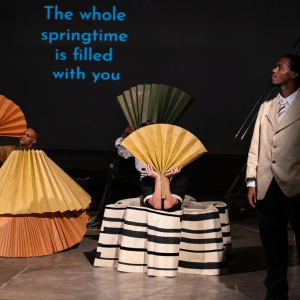
Photo: Stella Olivier
Throughout the course of a year, we see a great deal of art, not all of which we write about — not because we think it unworthy of mention, but sometimes because of time constraints or because it does not sit naturally within the broader themes of a particular edition. And sometimes we see work with no intention of writing about it — in an attempt to switch off the analytical impulse and simply enjoy it for what it is.
With that in mind, we wanted to bridge the gap by highlighting some upcoming works in London and New York, as well as two beyond those metropolises, which we believe are especially worthy of note. Some of the works featured in this first instalment of what will become a semi-regular feature will also be the subject of full reports later in the year.
London is getting its groove back. Some quarters are still recovering from the effects of the pandemic, but there is optimism in the air. In theatre, several new artistic directors are settling into their roles and unveiling their early seasons. There are more than a few shrug-worthy offerings, but there are also genuine grounds for excitement among the productions clearly intended to please the crowd.
Theatre
Sinatra The Musical, Aldwych Theatre, June 2026.
Will it prove a hagiography in the vein of such disappointments as MJ The Musical, or dare to go deeper and explore the complexities of the man with the blue eyes? We shall find out. Yes, it is another bio-jukebox musical, but when the music is this good and the subject so fascinating, one hopes for the best. British actor Joel Harper-Jackson steps up to the mic to take on some of the most beloved songs in the Great American Songbook.
Of the recent artistic director appointments, perhaps the one I found most interesting and unexpected was David Byrne’s appointment at the Royal Court, a theatre that, for the past decade or so, had lost its way and become a kind of artistic no-man’s-land. A once important and beloved home for new writing had slid into irrelevance. Byrne has quickly turned things around. In its 70th anniversary year, he has programmed a season that looks back while simultaneously pointing to the future. Currently playing in the main house is the New York transfer John Proctor Is the Villain by Kimberly Belflower. This response to Arthur Miller’s The Crucible was a hit on Broadway and has transferred to London with the same creative team — a smart move, because it is hard to imagine this production being bettered. Danya Taymor’s near pitch-perfect production — there is a slight lag midway through the play, which stems from a brief lapse in the writing rather than from anything in her direction — is a knockout. If there is any sanity in the London theatrical ecology, John Proctor Is the Villain will transfer to the West End.
By programming this new American play, Byrne has confirmed a suspicion I have harboured for some time: that American theatre is in the midst of a golden age of writing — and that is good news for us all.
I am excited to see how Byrne’s leadership evolves in the years ahead, but for now I am simply rejoicing in the fact that this important institution feels back on track. Better still, the season as a whole looks worth seeing — assuming, of course, that you can secure a ticket. Byrne has balanced star power, in the form of Tilda Swinton and Gary Oldman, with new writing and lesser-known artists, and audiences have responded accordingly: several productions have already sold out. The Royal Court is seventy, but like a venue at least half its age, it feels young, vibrant, and vital. Just as it should.
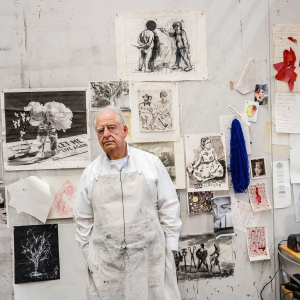
Photographh of William Kentridge by Jabulan Dhlamini
Music
Wigmore Hall celebrates its 125th anniversary this year with a bold array of performances and initiatives. With over 600 concerts scheduled, alongside a scheme offering more than 5,000 free tickets to under-25s, this promises to be a year worthy of celebration.
Perhaps the single event we are most eagerly awaiting is the opening of Thomas Adès’s residency. Newly appointed as Associate and Resident Artist, Adès begins with a programme featuring his own works, Blanca Variations and Vesper, alongside Haydn, Janáček, and Stravinsky on 26 September 2026.
From an institution celebrating a centenary and a quarter to a brand-new venue, the capital will be filled with music throughout the year.
British Airways ARC, a new £1.3 billion venue opening in June on the site of the former Olympia, will bring with it a brand-new music arena, 30 restaurants and bars, and two hotels. With a capacity of 3,800, it is set to become a major addition to London’s cultural landscape. The 1,575-seat British Airways Theatre, London’s largest new theatre in 50 years, will follow in 2027.
The venue itself will be as much of a draw as the acts it presents.
The event that has particularly caught our attention is the 21 November concert by Branford Marsalis and Dianne Reeves celebrating John Coltrane.
Since 1934, Glyndebourne Festival Opera has been presented in an English country house in East Sussex, offering an annual programme of opera in a distinctly British setting. This year, Glyndebourne presents its first-ever Tosca and L’Orfeo. Of the two, it is L’Orfeo, directed by the South African artist William Kentridge, that excites us most. The production also marks Kentridge’s Glyndebourne debut and will be the first time one of his opera productions has premiered in the UK. Kentridge is a true original and has distinguished himself in opera before — notably with Berg’s Lulu for Dutch National Opera in 2015, later seen at the Metropolitan Opera. L’Orfeo is one of the works we are most eager to see this year, running from 14 June to 25 July 2026.
Art
This autumn, Tate Britain will premiere a new film installation by Onyeka Igwe entitled our generous mother. The work continues Igwe’s interest in exploring archives and unravelling histories, here focusing on the university in Nigeria where the artist’s mother studied in the 1970s. The exhibition is the latest instalment of Art Now, Tate Britain’s long-running programme of free contemporary exhibitions. Celebrating its 30th anniversary this year, Art Now continues to showcase emerging talent and new developments in the British art scene.
Igwe’s new work explores the University of Ibadan, the oldest degree-awarding institution in Nigeria. Moving through the university’s tropical modernist architecture, the film traces the building’s personal and political histories, from its colonial roots through national independence and civil war to the present day. It presents multiple, often contradictory, accounts of the place, blurring fiction and reality, analogue and digital, fragmentation and unity.
Art lovers could spend the remainder of 2026 at Tate Britain and leave fully sated. Another attention-grabbing exhibition is already in the pipeline: the largest European retrospective of James McNeill Whistler in thirty years, running from 21 May to 27 September. Bringing together around 150 works, the exhibition offers a rare opportunity to take in the full range of his practice — painting, drawing, printmaking, and design — from Portrait of the Artist’s Mother to the nocturnes and sketchbooks that illuminate his working process. It promises to trace the development of an artist whose elusive images of modern life helped point the way towards modern art, while also presenting Whistler as an ambitious, experimental, and highly public figure within Victorian culture.
The exhibition concludes with a group of extraordinary full-length portraits, their surfaces repeatedly rubbed back and reworked until the figures seem almost ghostlike. Among them are the enigmatic Portrait of Lady Archibald Campbell (1883) and the Rembrandt-inflected Gold and Brown: Self Portrait (c. 1896–98).
New York
Theatre
The 2026 season lacks the obvious excitements that ushered in 2025, and that may ultimately prove to be a good thing. It has not begun with a bang, and some big openings have landed with a thud — just as we predicted before tickets even went on sale, Dog Day Afternoon among them. The rash of openings in April and May will be make-or-break for the season. Whatever happens, The Lost Boys — a new musical based on the 1980s film — could yet prove one of its surprises.
Perhaps the show in New York I am most looking forward to is Shmigadoon! Not because I have seen the television show upon which it is based — I have not — but because it is directed and choreographed by Christopher Galetti, who helmed my favourite new musical of 2025, Death Becomes Her. I’m hoping lightning strikes twice for Gattelli and Broadway.
Music
Gustavo Dudamel’s inaugural 2026–27 season as the New York Philharmonic’s Tang Music & Artistic Director signals an ambitious new era for the orchestra. The opening month alone runs from 10 September to 3 October 2026 and includes his inaugural gala, collaborations with Lang Lang and Yo-Yo Ma, a 9/11 memorial focus featuring John Adams’s On the Transmigration of Souls, and world premieres by Zosha Di Castri and Tania León.
In October 2026, Dudamel will lead the Philharmonic on a two-week, ten-concert European tour to Paris, Barcelona, Madrid, Berlin, Hamburg, and Vienna, with repertoire including Adams’s On the Transmigration of Souls, the European premieres of works by León and Di Castri, and symphonies by Mahler and Prokofiev. The season also launches a five-year Carnegie Hall opera partnership with concert performances of Puccini’s Tosca, includes a major Beethoven focus in spring 2027, and concludes with the Philharmonic’s first-ever performances of Bernstein’s MASS.
The season also arrives with a note of farewell: principal cello Carter Brey will retire at the end of the 2025–26 season after 30 seasons with the orchestra, bringing to a close one of the Philharmonic’s most distinguished long-serving tenures. This may well be the season that re-establishes the New York Philharmonic as one of the world’s great orchestras. Based on the concert I saw last year, when Dudamel conducted Mahler’s Seventh Symphony with the orchestra, that may already be the case. The Philharmonic now has a beautiful and acoustically refined concert hall in David Geffen Hall and a charismatic and gifted new Music Director.
Dance
New York City is arguably the greatest dance city in the world. It is home to two world-class ballet companies, New York City Ballet and American Ballet Theatre, as well as modern dance institutions such as the revered Alvin Ailey American Dance Theater and numerous smaller companies producing work of the highest quality. Nor is the city merely home to some of the finest resident companies: it also regularly welcomes troupes from near and far.
New York City Ballet is my favourite company anywhere. Its repertory is unparalleled. Founded in 1948, it was shaped above all by the genius of George Balanchine, but it was doubly blessed by the arrival of Jerome Robbins in 1949 as co-founding choreographer, who helped define its artistic identity.
Today, NYCB still champions new work and has, in recent years, added Alexei Ratmansky as Artist in Residence. Ratmansky’s move across the Lincoln Center plaza from American Ballet Theatre was a major coup for the company.
New York City Ballet’s spring season begins on 21 April and includes numerous highlights, among them Divertimento No. 15, one of Balanchine’s few ballets set to music by Mozart, and Jerome Robbins’s contemplative In Memory of…. Rounding out the season is the full-length comedy Coppélia, in which the beloved principal dancer Megan Fairchild will give her farewell performance.Photo: The Frick Collection, Reception Hall
Art
The Frick Collection is housed in one of New York City’s last great Gilded Age homes providing intimate encounters with one of the world’s foremost collections of fine and decorative arts. Open since 1935, the institution originated with Henry Clay Frick, who bequeathed his Fifth Avenue residence and collection of European paintings, sculpture, and decorative arts for the enjoyment of the public. The museum’s holdings, which encompass masterworks from the Renaissance through the late nineteenth century, have grown over the decades, more than doubling in number since the museum opened.
Last spring, the Frick completed a major renovation and enhancement project and reopened on 17 April 2025. Designed by Selldorf Architects, with executive architect Beyer Blinder Belle, the project was developed to honour the historic legacy and character of the Frick while addressing critical infrastructural and operational needs.
The Frick is more glorious than ever. In February, the museum announced the promised gift of Thomas Gainsborough’s Mrs. Alexander Champion (1767 and c. 1775) from one of its trustees. The painting has been shown in the museum’s permanent collection galleries since 11 February and will remain on view throughout the run of the Frick’s special exhibition Gainsborough: The Fashion of Portraiture, which opened to the public in February. The gift is displayed separately from the exhibition, in the Library Gallery.
The Frick is a personal favourite, and I never tire of returning to its stunning collection, displayed in such a manner that one feels an intimacy with the work rarely experienced in more traditional museums. I feel truly at home at home at The Frick.
For the first time in its history, the public are permitted to visit the second floor, once the family’s private living quarters, further enhancing the sensation of encountering its masterpieces within a private home. After years of longingly gazing at the cordoned-off staircase leading to the upper floor, and fantasising about what lay beyond it, I am eager at last to climb those stairs and discover the glories for myself.
In 2026, the Frick returns in full force with an expansive programme of exhibitions, music, talks, and special events.
Another major reopening in New York is the New Museum, which reopened on 21 March 2026 following a 60,000-square-foot expansion.
From 3–5 June, the museum’s cultural incubator, NEW INC, will host a three-day festival devoted to art, design, and technology. The programme includes demonstrations, exhibitions, performances, workshops, and talks, and will feature the work of 39 current NEW INC members across disciplines including art, design, technology, science, architecture, and entrepreneurship.
Founded in 2014, NEW INC was the first museum-born cultural incubator and now supports more than 120 creative practitioners each year through mentorship, professional development, and community-building. In 2016, it launched ‘Demo Day’, a platform for presenting members’ projects to an invited audience of creative directors, investors, and curators. In 2023, DEMO opened to the public and expanded to include performances, talks, exhibitions, and opportunities to engage with NEW INC’s wider network of mentors and alumni. DEMO2026 will be the first edition of the festival to take place since the museum opened its OMA-designed expansion on the Bowery.
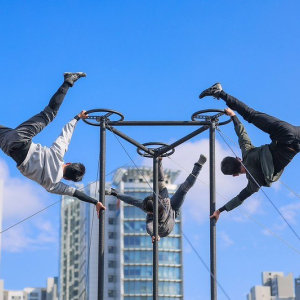
California has more to offer culturally than film and television: world-class symphonies, ballet companies, museums, and yes, even theatre. Arguably, its two most respected theatres are located in San Diego: the Old Globe and La Jolla Playhouse. They are two powerhouse theatres, each an integral part of the US theatre ecology and often a starting point for shows that go on to transfer to Broadway. Both theatres attract excellent talent and have loyal audiences.
La Jolla Playhouse has a strong connection to Hollywood, having been founded in 1947 by Gregory Peck, Dorothy McGuire, and Mel Ferrer.
One of the interesting things about exploring the arts outside New York City is becoming aware of how seasonal programming is. Unlike London and New York, most cities in America present work during fixed periods; if you visit in the ‘off-season’, the cultural pickings can be slim. These theatres operate on a season-ticket basis, which is the backbone of their financial model.
Although we will just miss productions we would gladly have taken in had we timed our visit more in tune with the schedule, we will, arrive during La Jolla Playhouse’s Without Walls Festival (WOW), from 23–26 April, which will be an exhilarating way to conclude our visit.
Taking over the UC San Diego campus for four days, the festival brings together immersive and site-responsive performance. Presented in partnership with UC San Diego, t offers more than two dozen events spanning theatre, dance, music, puppetry, and spectacle, with work by local, national, and international artists.
Admission is free, and while most events cost nothing to attend, a small number are ticketed. This year’s line-up includes pieces by companies from San Diego, Los Angeles, New York, Chicago, Canada, Belgium, France, and South Korea, reflecting the festival’s broad international reach as well as its commitment to home-grown talent. Among the featured works are Adult Puppet Cabaret, Again! Again!, Carry On, Choir! Choir! Choir!, Deep Fake, Handle with Care, Karaoke Dreams, Night Watch, Suzik, Tea Party at the End of the World, and With Honors. Three art installations — LAMP, Light Lane, and Sung Forests — will also form part of the festival.
Alongside the main programme, WOW will also include performances of La Jolla Playhouse’s 2026 POP Tour production, Colorín Colorado; work created by students from the San Diego Unified School District Honors Theatre Project and UC San Diego Theatre and Dance; and a developmental workshop of Molly Went Missing.
Without Walls is the Playhouse’s signature programme, devoted to work that takes place beyond conventional theatre spaces. Since launching in 2011, it has built a reputation for inviting audiences to encounter performance in unexpected settings across San Diego — from beaches and basements to bars and cars — and has grown into one of the region’s most distinctive cultural offerings. WOW indeed.
Looking beyond the Without Walls Festival, La Jolla Playhouse has an intriguing season ahead, featuring West Coast premieres — Branden Jacobs-Jenkins’ excellent play Purpose among them — and some intriguing world premieres. This pocket of California is a mini-theatre oasis and very much warrants our attention.
In researching this piece, it has struck us that 2026 is making a strong case for the importance of art in our lives. Whether by accident or design, it seems determined to lift us up, to make us think, and to entertain. The variety of projects we focus on in this article is but a drop in the ocean compared with what is out there. We hope everyone will feel inspired to take part, often and with gusto.
The work we do at The Kael Report is a constant reminder of how fortunate we are to encounter art in all its forms. Whether good, bad, or indifferent, it is a privilege to be in the presence of creativity. That privilege is worth celebrating — and worth passing on.